


A Short-Video Platform Shaped by Culture, Creativity, and Commerce.
TikTok has become a key short-form video platform in the Western social media landscape. As the international counterpart to Douyin, it is built around algorithmic discovery, creator culture, entertainment-led content, and increasingly, social commerce.
For brands, TikTok offers a way to reach audiences beyond existing followers, particularly when content feels timely, native to the platform, and connected to user interests.
Platform Role
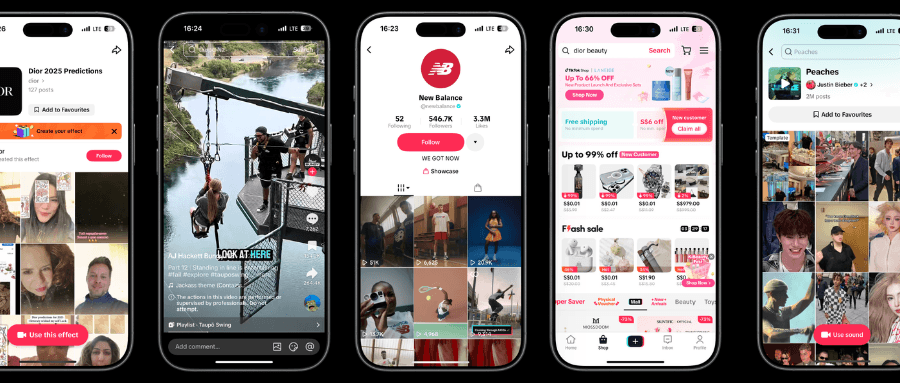
TikTok’s For You Page is central to the platform experience. Unlike platforms that rely more heavily on follower networks for distribution, TikTok surfaces content largely through behavioural signals and engagement patterns.
This creates opportunities for brands to test creative ideas and reach new audience segments. At the same time, it requires a different content mindset. Messages that feel too polished or adapted from other channels may be less effective than content designed specifically for TikTok’s short-form environment.
Users and Behaviour
TikTok has a young and highly engaged user base, while its audience is gradually broadening as early users mature. Many users open the app for entertainment, but their behaviour increasingly includes search, product discovery, reviews, tutorials, and real-life recommendations.
This makes TikTok relevant for brands that can show products, services, or experiences in action. Content that feels practical, personal, or immediate may help build trust more naturally than traditional promotional messaging.
The platform also moves quickly. Trends, sounds, formats, and community conversations can change fast, so brands may benefit from a more flexible approach to content planning and approval.
Content, Advertising, and Commerce
Popular TikTok formats often connect to a clear theme, sound, trend, or community behaviour. Tutorials, product reviews, behind-the-scenes clips, “day in the life” videos, reactions, storytelling, and comment-led responses are commonly used by brands and creators.
Advertising options include in-feed ads, TopView ads, search ads, branded effects, hashtag campaigns, influencer promotions, and Spark Ads. Spark Ads can be particularly useful when brands want to amplify organic or creator-led content while keeping the experience more native to the feed.
TikTok Shop and related commerce features have also expanded the platform’s role in the purchase journey. Product tags, livestream shopping, brand pages, and in-video prompts can help connect discovery with conversion, especially when supported by credible content and clear product information.
Customer Experience and Brand Strategy
TikTok is also becoming a channel for customer interaction. Comments, direct messages, Q&A-style replies, and brand shopfronts all contribute to how users experience a brand on the platform.
For brands, this means TikTok can support more than awareness. It can also be used for product education, audience feedback, creator engagement, and social commerce.
A strong TikTok strategy usually combines creative flexibility with clear structure. Content pillars, brand guidelines, creator selection, and performance measurement remain important, but they need to allow enough room for speed, experimentation, and platform-specific expression.
Platform Summary
TikTok is well suited to brands that want to build cultural relevance, test short-form storytelling, and connect with audiences through creator-led and entertainment-driven content. Its value is most clearly reflected when brands understand the platform’s tone and develop content specifically for its user behaviour.
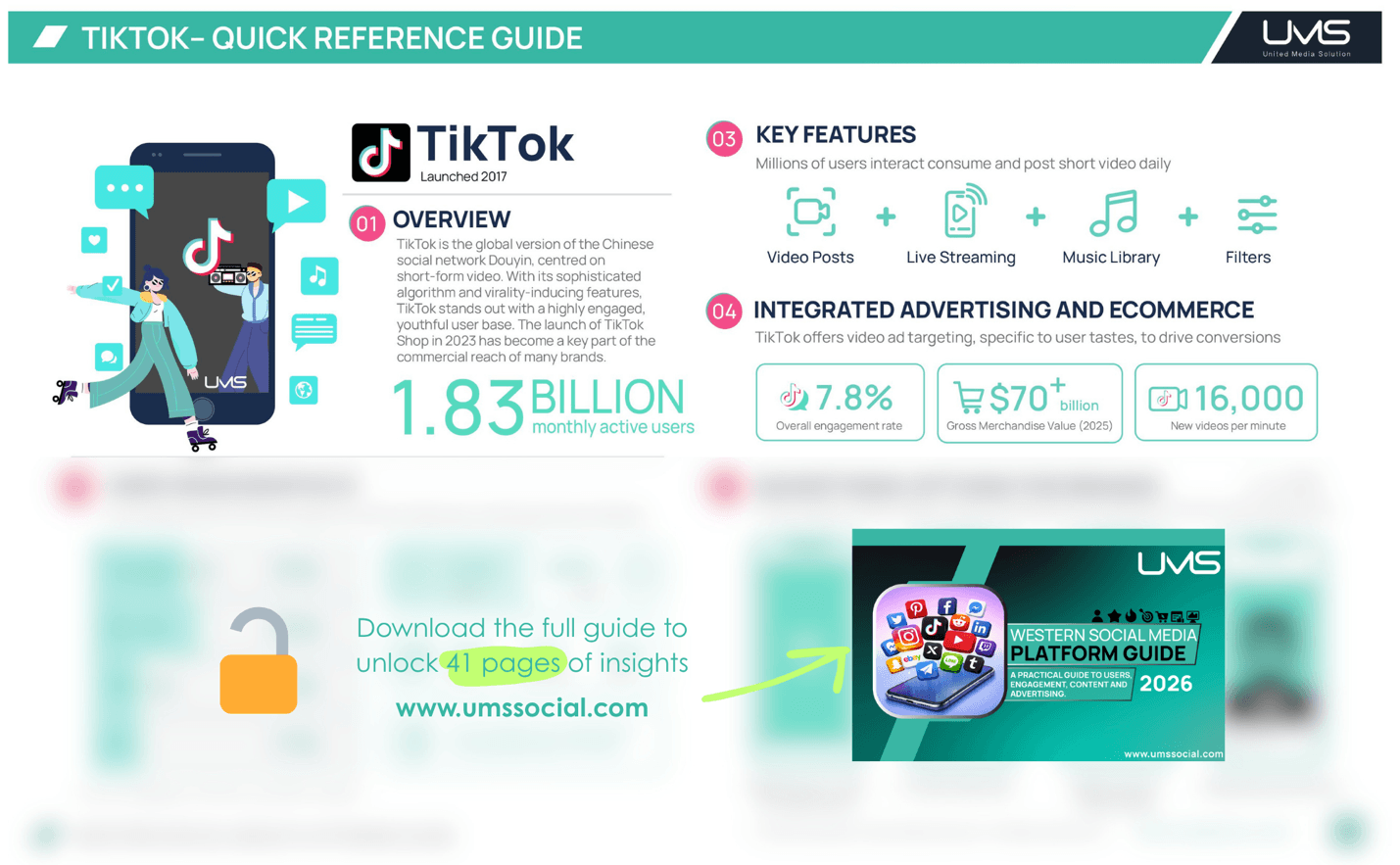
For a practical breakdown of TikTok, explore our Western Social Media Platforms Guide 2026 — built to help brands plan a platform-native TikTok presence across short-form video, creator engagement, cultural relevance, and social commerce.