


Background & Challenge
Hong Kong has long been a key long-haul market for New Zealand. However, as competition intensifies and traveler expectations shift toward more sophisticated, experience-led itineraries, the travel trade’s largely traditional and increasingly outdated understanding of New Zealand has become a growing commercial barrier. Without regular, structured updates on new experiences, evolving routes, and seasonal offerings, travel agents often lack the confidence and tools to translate interest into bookings—ultimately constraining the sales potential for both destination products and airline tickets.
Air New Zealand and Tourism New Zealand faced two key market challenges:
- Limited Exposure to New Zealand’s Evolving Travel Experiences
Many travel agents in Hong Kong had limited visibility into New Zealand’s increasingly diverse and contemporary travel offerings. Their understanding of the destination often remained rooted in traditional itineraries, with little awareness of newer experiences, routes, and seasonal products. - A Conversion and Confidence Gap Within the Travel Trade Partners
While New Zealand maintained strong destination appeal, many travel agents struggled to convert awareness into tangible sales. Without consistent and up-to-date destination knowledge, confidence remained low—limiting their ability to actively recommend and sell New Zealand travel experiences.
To address these challenges, the two organizations jointly launched the “Seek New Zealand” initiative. The campaign aimed to re-engage the Hong Kong travel trade through systematic content communication.
UMS acted as the strategic partner, facilitating collaboration and ensuring the initiative was effectively brought to market.
Core Strategy and Highlights
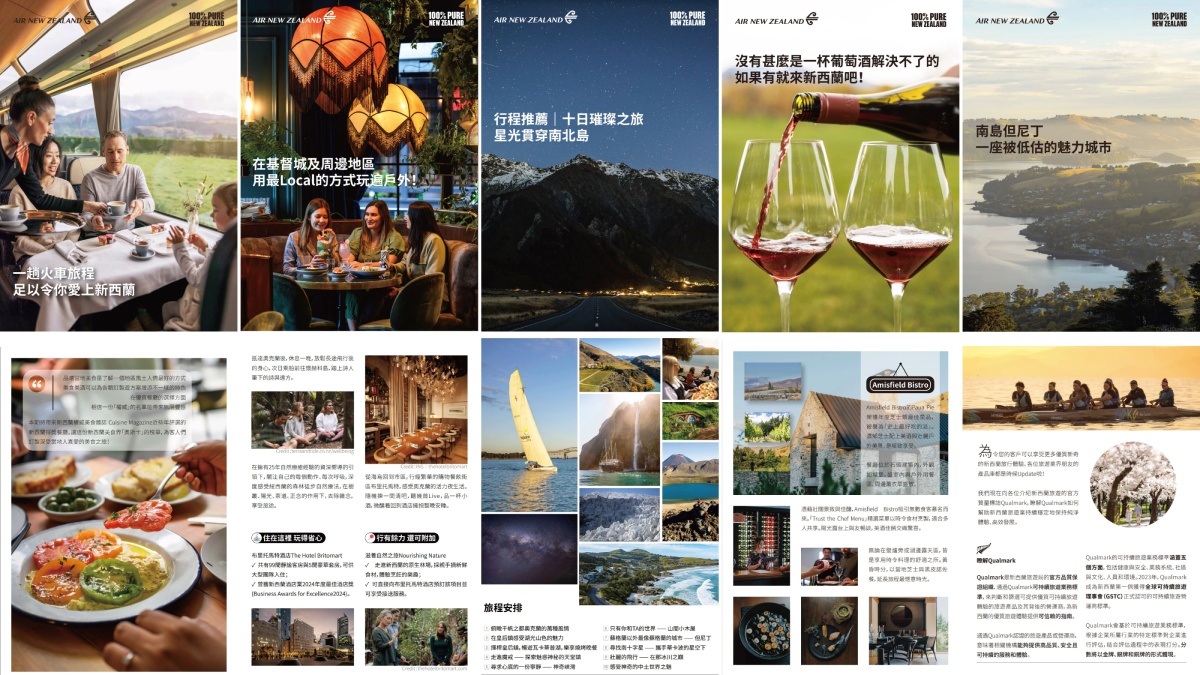
UMS developed the Seek New Zealand monthly EDM campaign with Air New Zealand and Tourism New Zealand together, built on the following strategic pillars:
- Content Designed for Sales Enablement
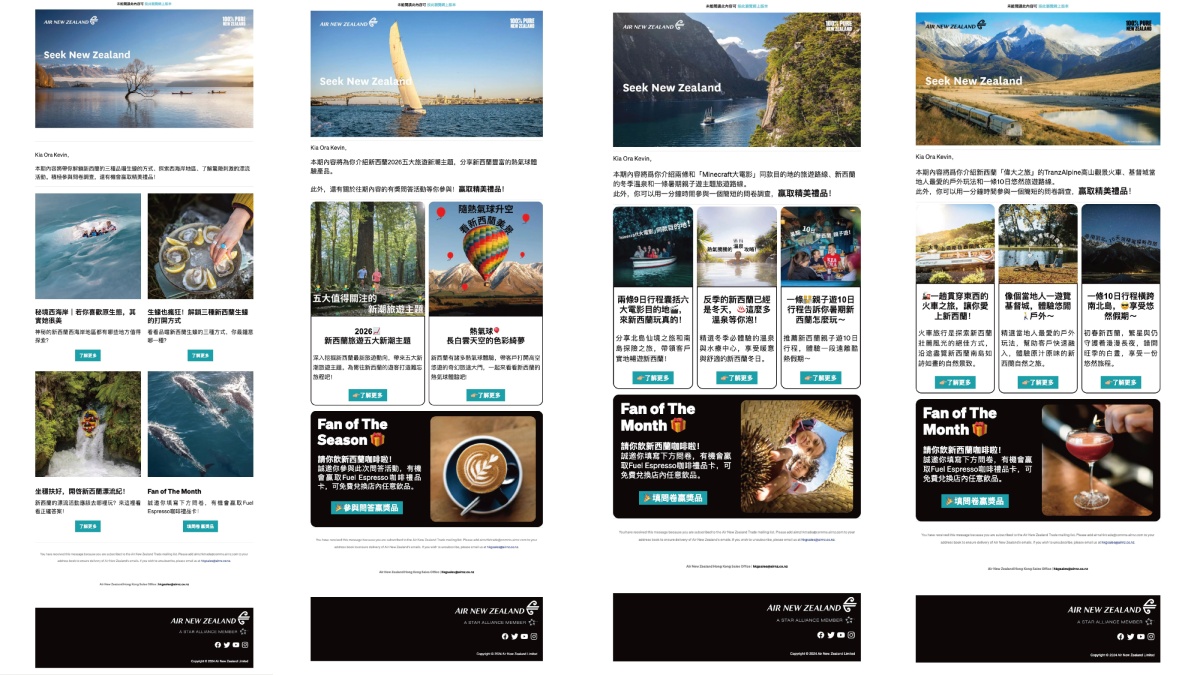
Each month, two to three themed content pieces were developed to showcase destination highlights, new tourism products, and practical travel insights. All content was localized for the Hong Kong market, presented in Traditional Chinese and aligned with local reading habits. Through clear thematic structure and well-defined selling points, the campaign enabled travel agents to quickly understand and translate destination information into compelling sales narratives. - Conversion-Oriented Engagement Design
Each issue not only delivered information but also embedded clear action points to shorten the path from inspiration to booking—through article previews, downloadable PDFs for easy sharing, and direct links to official product pages and contact channels. - Data-Informed Optimization
Email performance metrics, including open rates, click-through behavior, and agent feedback, were continuously monitored. These insights informed ongoing adjustments to content themes and design formats, ensuring stronger engagement while maintaining a consistent communication cadence.
Results & Impact
Through sustained, high-quality content delivery, Seek New Zealand successfully established a long-term communication approach with the Hong Kong travel trade. The initiative not only systematically enhanced travel agents’ depth of understanding and confidence in recommending New Zealand as a destination, but also generated mutual value for both brands at the market level.
At a broader level, the campaign generated shared value for both brands. It reinforced credibility within key distribution channels, deepened destination understanding, and strengthened New Zealand’s positioning as a premium long-haul destination. By combining consistent sales-oriented content with compelling destination storytelling, the program built a stronger foundation for travel product promotion, increased flight consideration, and future booking conversion.
Key Takeaways
Sustained Empowerment and Strategic Alignment Drive Scalable B2B Impact
In a fragmented information landscape, travel agents rely on consistent, credible, and well-structured destination knowledge to confidently sell travel experiences. When combined with strong alignment across airlines, tourism boards, and partners, this sustained empowerment not only reduces selling complexity but also drives clearer messaging, stronger engagement, and more scalable market impact.