


As outbound demand from China continues to recover, destination preferences are also becoming more nuanced.
In 2026, traditional study destinations such as the UK, US, and Australia continue to play a central role. These markets remain well established, with strong recognition among students and parents.
At the same time, Asia-Pacific destinations are receiving increased attention, becoming part of a broader and more diverse consideration set. Rather than replacing traditional choices, these options are often evaluated alongside them.
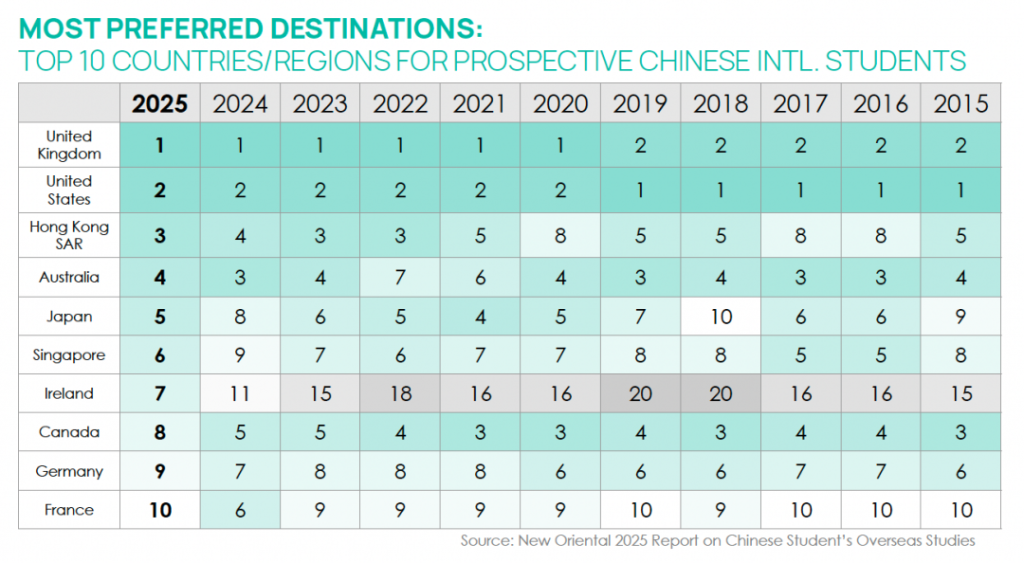
This reflects a shift in how students approach decision-making.
Instead of focusing on a single preferred destination early on, many students are now comparing a wider range of options. Factors such as affordability, proximity, lifestyle, and post-study pathways are all part of the evaluation process.
As a result, comparisons are becoming more detailed and more balanced.
For education providers, this does not necessarily mean a loss of position for traditional destinations. However, it does suggest that expectations are changing. Students are looking more closely at how each destination aligns with their personal priorities and long-term plans.
In this environment, clarity of positioning becomes increasingly important. Institutions that are able to clearly communicate what they offer — and how that fits within a student’s broader decision framework — are more likely to remain in consideration.
This evolving dynamic is explored further in UMS’ China Report Card 2026, which looks at how destination preferences are developing across the market.