


A Visual Platform for Discovery, Storytelling, and Social Commerce.
Instagram has developed from a photo-sharing app into a visual-led platform for discovery, creator content, messaging, and shopping. For brands, it can serve as both a storytelling channel and a consideration touchpoint, helping audiences explore products, follow trends, and build familiarity with a brand over time.
Platform Role
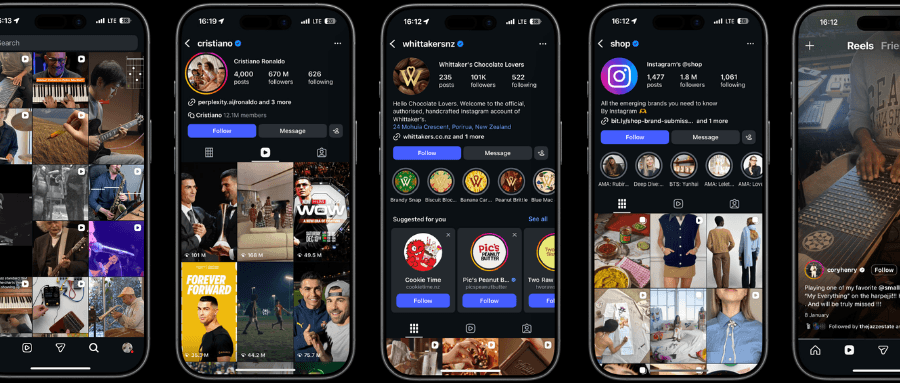
Instagram’s value lies in its range of content formats. Reels can support reach and discovery, Stories help brands stay visible in daily interactions, carousel posts allow more structured explanation, and profile grids act as a visual brand homepage.
This makes the platform useful for brands that need to balance inspiration with information. Instead of relying on one format, brands can use different content types to guide audiences from awareness to deeper engagement.
Instagram is also increasingly used as a search and discovery environment. Users may search for brands, creators, places, products, and lifestyle references directly on the app, which means a well-managed profile can contribute to both brand visibility and credibility.
Users and Behaviour
Instagram reaches a broad audience base, with particular relevance among younger and visually oriented users. Audiences often move between entertainment, inspiration, messaging, and shopping within the same platform experience.
Because the platform is visually competitive, content that feels current, useful, or emotionally relevant is more likely to gain attention. Highly polished brand assets can work well, but they usually need to feel native to the platform rather than overly corporate.
For brands, the key challenge is to maintain consistency while avoiding repetition. A balanced content mix may include product stories, creator collaborations, behind-the-scenes moments, user-generated content, and short-form video.
Content, Advertising, and Commerce
Reels are often useful for reach and trend participation, while carousel posts can support product education, travel tips, campaign messages, or step-by-step explanations. Stories are effective for lighter, more frequent interaction through polls, links, reposts, and updates.
Instagram’s advertising options are closely integrated into the user experience, including in-feed ads, Stories ads, Reels ads, carousel ads, collection ads, and creator-led campaigns through Meta Ads Manager.
Commerce features also make Instagram relevant for product discovery and consideration. Product tags, shopfronts, and “Shop now” buttons can help shorten the journey between inspiration and action. However, creative quality remains important, particularly when paid content appears alongside organic posts from creators and friends.
Brand Strategy
A strong Instagram presence usually requires more than regular posting. Brands benefit from a clear visual direction, a defined tone of voice, and content that gives users a reason to stop, save, share, or respond.
Creator partnerships and user-generated content can also help brands feel more relatable. Rather than using Instagram only as a promotional channel, brands can treat it as a space to show context, personality, and relevance.
Platform Summary
Instagram is a valuable platform for brands that rely on visual storytelling, lifestyle relevance, creator collaboration, and social commerce. Its role is strongest when content formats are planned together, allowing users to discover, understand, and engage with the brand in different ways.
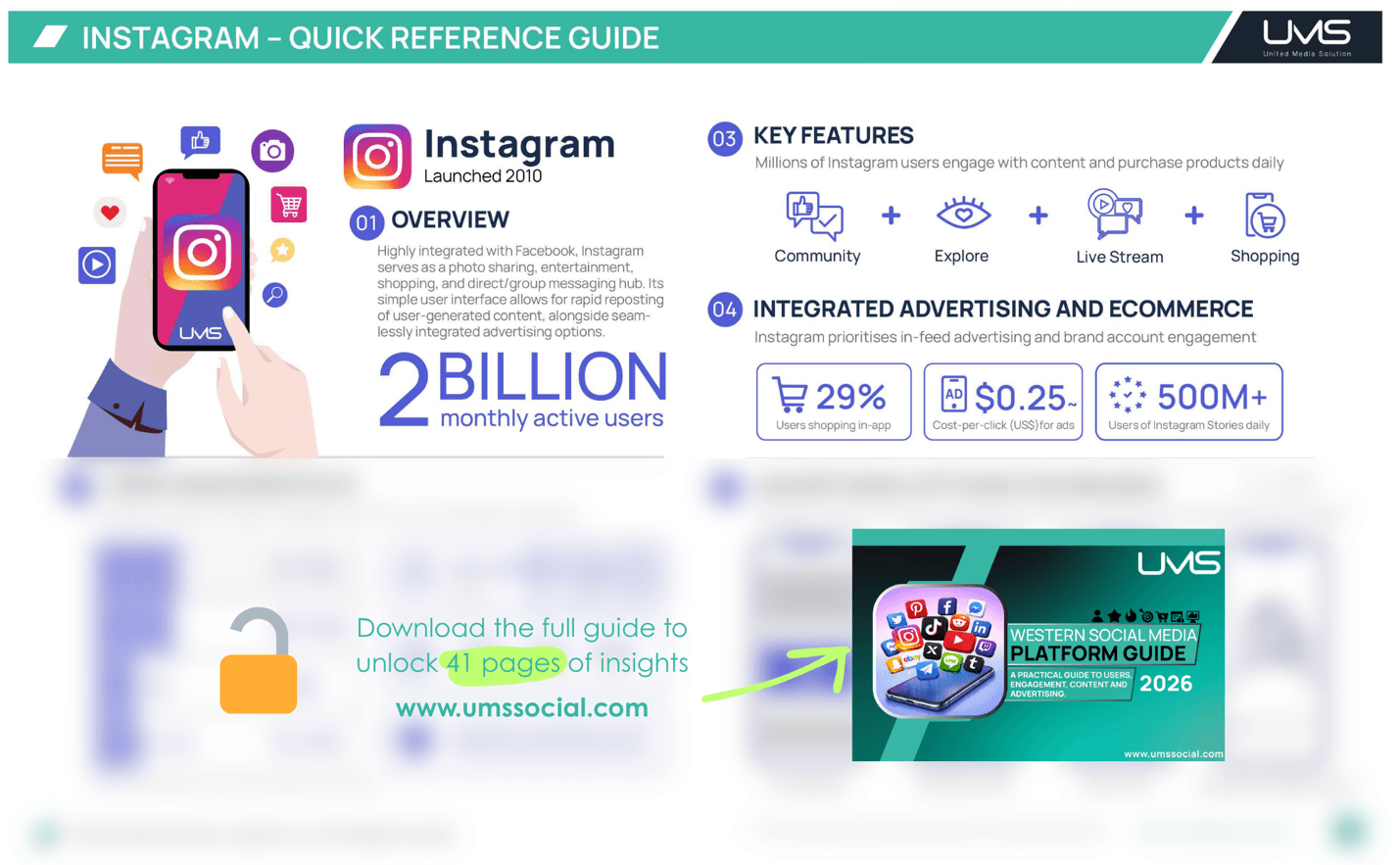
For a practical breakdown of Instagram, explore our Western Social Media Platforms Guide 2026 — built to help brands plan a visually engaging Instagram presence across discovery, storytelling, creator collaboration, and social commerce.